Furniture Compliance for the US and EU: What Buyers Verify
Vista Furniture Co. is an independent sourcing consultancy in São Paulo. We work for furniture buyers, never for factories.
By Matheus X. Pinho, Founder and Managing Director of Vista Furniture Co.
United States: formaldehyde (TSCA Title VI and CARB)
A furniture program can be beautiful, on time, and on budget, and still be stopped at the border. What stops it is compliance. For buyers importing into the United States and the European Union, three bodies of rule now decide whether a container clears: formaldehyde limits, timber legality, and proof that the wood is not tied to deforestation. None is optional, and all of them put the burden on you, the importer, not the factory.
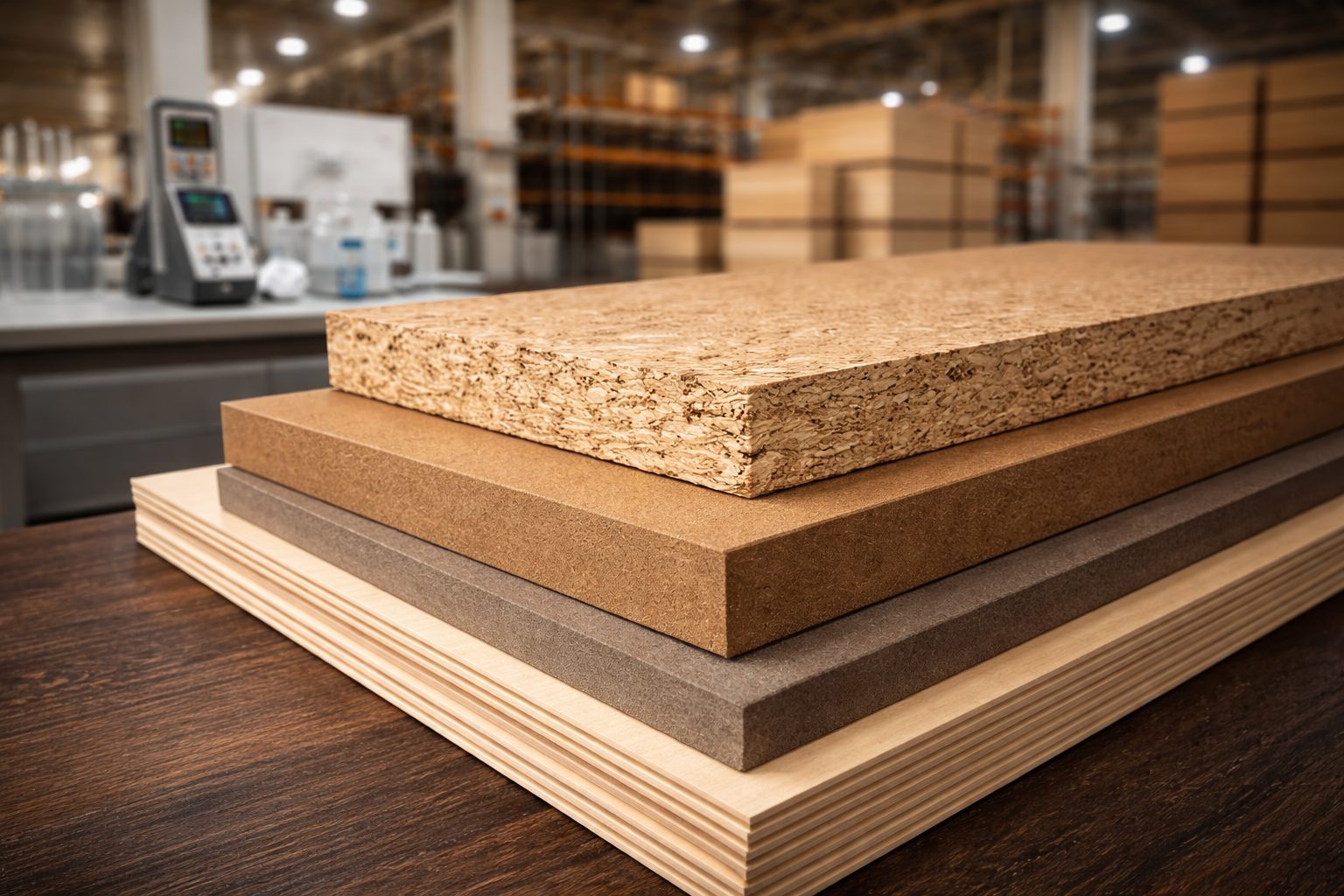
Furniture built with composite wood (hardwood plywood, MDF, or particleboard) sold in the US must meet the formaldehyde limits of TSCA Title VI, which the EPA aligns with California's CARB standard. Since March 2019, covered products must be labeled TSCA Title VI compliant, certified by an EPA-recognized third-party certifier, and carry import certification. Importers and retailers keep records for at least three years. In February 2026 the EPA proposed technical updates that align further with CARB, without new limits.
What it means for you: a factory that cannot show current third-party certification and correct labeling is not a candidate, whatever the sample looks like. Solid-wood construction lowers exposure to this rule, one reason sourcing solid wood from Santa Catarina matters to the category.
United States: timber legality (Lacey Act, Phase VII)
The Lacey Act makes it illegal to import illegally harvested wood, and since December 1, 2024, Phase VII extended its declaration requirement to furniture. Every covered import now needs a declaration with the scientific name (genus and species), quantity, value, and country of harvest. A single piece can hold several species, so the declaration is only as good as the documentation your supplier provides. Penalties run into six figures per violation, and cargo can be seized.
What it means for you: supplier documentation stops being paperwork and becomes a selection criterion. A factory that can name the species and origin of every wood component is worth more than one that quotes less and shrugs. We treat this as part of how to vet a furniture factory.
European Union: deforestation (EUDR)
The EU Deforestation Regulation covers timber and furniture, and requires a due diligence statement proving the product is deforestation-free (no deforestation after December 31, 2020), legal in its country of production, and traceable to the plot of land. Application was postponed twice and now begins 30 December 2026 for large and medium operators, 30 June 2027 for micro and small ones. It replaces the old EU Timber Regulation and ranks producing countries by deforestation risk.
What it means for you: if you sell into the EU, legal-origin and geolocation data for the wood are not a "later" problem. Brazil's position here is strong when the origin is documented, which is why timber sourcing under EUDR and the Lacey Act and traceable species matter more than a certificate on a wall.
Certification: useful, not sufficient
FSC certification is a strong signal of legal, responsible forestry, and buyers should ask for it. But on its own it does not satisfy TSCA, Lacey, or EUDR, each of which has its own declaration and records. Treat FSC as evidence that strengthens your file, not as a substitute for it.
The buyer's move: build the file before the order
Compliance is not something you check at the port. It is built into supplier selection. Before the first order, a buyer should be able to answer, for each supplier:
- Can they show current TSCA Title VI and CARB certification and correct labeling for composite parts?
- Can they name the scientific species and country of harvest for every wood component?
- Can they provide legal-origin and geolocation data for the timber, if you sell into the EU?
- Do they hold FSC or equivalent, with chain-of-custody records?
A supplier that answers cleanly is not just compliant. It is a better supplier, because the same discipline shows up in quality and consistency. This is the logic behind our playbook for importing furniture from Brazil and how we qualify factories in the directory of Brazilian furniture manufacturers.
Getting this right in Brazil is easier than in many origins, because solid-wood construction and traceable species are common, not exotic. But easier is not automatic. The documentation still has to exist, and someone has to verify it before you commit.
If you are planning a program for the US or EU and want the compliance file checked before your first order, talk to us before you buy.
About the author
Matheus Ximenes Pinho is the Founder and Managing Director of Vista Furniture Co. He has spent more than twenty years in home and décor, fourteen of them in the Brazilian furniture industry, working across architecture, product development, retail, e-commerce and marketplaces. Based in São Paulo, he advises international buyers evaluating Brazilian manufacturers, materials, design capabilities and export readiness.
- Instagram: @vista.furniture.co
- Linkedin: Vista Furniture Co.
