Sourcing Children's Furniture From Brazil: The Standard Decides the Factory
Vista Furniture Co. is an independent sourcing consultancy in São Paulo. We work for furniture buyers, never for factories.
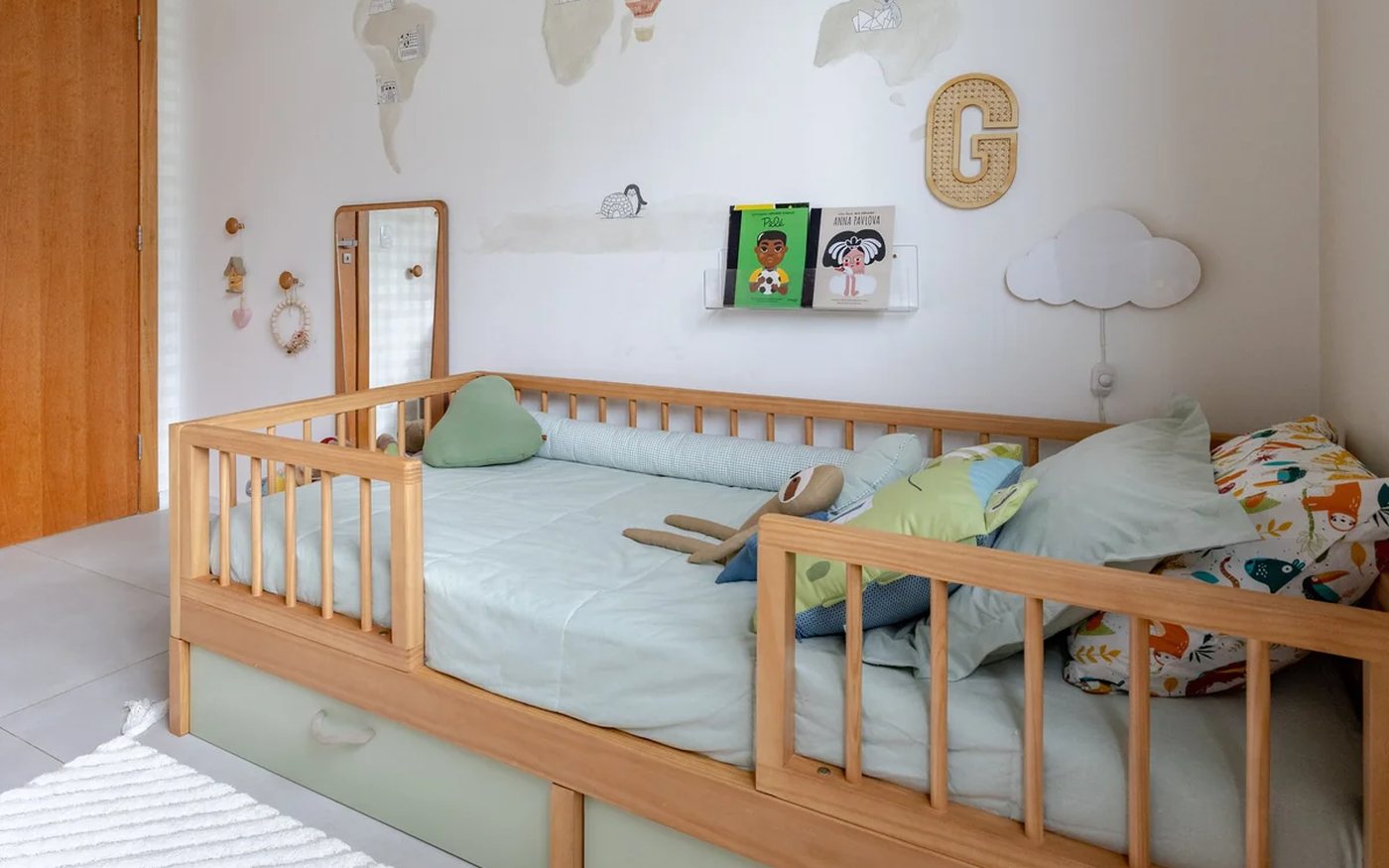
Every other furniture category begins with the buyer's specification. Children's furniture begins with the destination's safety standard, and the specification has to fit inside it. That inversion is the whole of this category, and it is why a shortlist for a children's programme looks nothing like a shortlist for the same buyer's living room range.
Brazil makes a great deal of children's furniture. Cots, bunks, chests, wardrobes and desks, mostly in pine and in panel, mostly from the southern clusters. Almost all of it is made to the Brazilian domestic market and to INMETRO rules. That is a real quality system and it is not the one your customs broker will be asked about.
The tip-over rule changed, and it caught a lot of suppliers out
For a buyer shipping into the United States, the single largest change in this category in a decade is the STURDY Act and the federal standard that implements it.
Since 1 September 2023, clothing storage units sold in the United States must meet CPSC's mandatory standard at 16 CFR Part 1261, which adopts ASTM F2057-23. The scope is defined by measurement rather than by what the piece is called. A unit is in scope if it is freestanding, has drawers or doors, is reasonably expected to store clothing, and meets all three of: configurable to 27 inches or more in height, mass of 30 pounds or more, and total functional enclosed storage volume above 3.2 cubic feet.
That catches chests, chests of drawers, dressers, armoires and door chests. It explicitly does not catch bookcases, entertainment units, office and dining furniture, jewellery armoires, under-bed drawer units or built-ins.
What changed is not only the limit but the test. The unit is placed on a block that replicates the tilt of a carpeted floor. Drawers are loaded at 8.5 pounds per cubic foot to simulate clothing. The STURDY Act requires testing that accounts for the weight of small children, drawers loaded with contents, more than one drawer open at a time and dynamic force, with a 60-pound test weight. A piece that passed the old voluntary standard does not automatically pass this one.
For a Brazilian factory this is rarely a capability problem. It is a knowledge and documentation problem. The plant can build a chest that passes. Whether it has ever had one tested, whether it understands that the test is destructive and iterative, and whether it will hold the construction constant afterwards are three separate questions.
Cribs, bunks and the standards that sit underneath them
Tip-over is only one line. A children's programme usually spans several regulated product types, each with its own standard, and they do not share a certificate.
In the United States, cribs are covered by their own federal standards, bunk beds by theirs, and any product designed or intended primarily for children twelve and under falls under the CPSIA. That brings two consequences a furniture buyer has to plan for. Lead is capped at 90 parts per million in surface coatings and 100 parts per million in accessible substrate. And the product requires a Children's Product Certificate based on testing by a CPSC-accepted third party laboratory, issued by the importer, for each applicable rule.
In the European Union the equivalents run through EN 716 for cots and folding cots, EN 747 for bunk beds and high beds, and EN 71-3 for the migration of certain elements out of coatings and accessible materials, alongside REACH restrictions on the substances in finishes and foams.
None of this is exotic. All of it is specific, testable and written down. The practical effect is that a children's range is not one compliance project, it is four or five running in parallel, and the lead time of the slowest one sets the launch date.
What this does to the shortlist
Three filters remove most of the Brazilian market before price is ever discussed.
Has the plant tested to the destination standard before? Not whether it can. Whether it has. A factory that has run a clothing storage unit through ASTM F2057 testing knows what the failures look like and has already absorbed the cost of learning. A factory that has not will discover it on your sample, on your timeline, at your expense.
Does it control its finishes? Lead and element migration limits are a coatings question, and coatings are usually bought in. The plant needs to know its supplier, keep the technical data sheets and be willing to hold the formulation constant. This is the same supply chain discipline we look for in any factory audit, applied to the one input that can recall a shipment.
Will it hold the construction after approval? In adult furniture a substituted fitting is a quality issue. In a bunk bed it is a safety certificate that no longer describes the product. Our guide to quality control and inspection in Brazil covers how that is monitored in production rather than at the end of it.
Material and construction, in the order they matter
Children's furniture is bought by an adult who is thinking about a decade of use and about resale. That argues for solid timber where the budget allows, and Brazil's position in solid wood is the strongest card the country has in this category. Plantation pine is the volume material and it is honest, workable and cheap. The denser native plantation species move the piece up a tier.
Where the programme is panel, everything in our guide to sourcing panel furniture from Brazil applies, and formaldehyde certification under TSCA Title VI stops being a documentation chore and becomes the centre of the file, because the end user is a child in a closed bedroom.
Two construction points are worth writing into the specification regardless of material. Slat spacing and any aperture a child can reach are regulated dimensions, not design choices. And the anti-tip restraint supplied in the carton is part of the product under the US standard, which means its instructions, its hardware and its presence in every box are all inspectable.
Where the category is usually made
The southern clusters dominate. Rio Grande do Sul and Santa Catarina for solid pine, Arapongas in Paraná for volume panel, with São Paulo plants covering both. Our guide to Brazil's furniture regions explains what each cluster was built to do, and sourcing bedroom furniture from Brazil covers the adjacent range a children's programme usually sits beside.
Volume is the honest limit. If the brief is a price-led children's container programme at scale into North America or Europe, Brazil will not usually win it, for the same reasons set out on the RTA and flat-pack page. Where Brazil does win is the programme where construction, timber and a ten-year piece matter more than the opening price, and the programme into Latin America and the Caribbean, where proximity changes the arithmetic twice over.
Before you send the brief
Name the destination and the standard, piece by piece, in the specification itself. Decide who holds the testing cost and who issues the certificate. Build the testing cycle into the timeline rather than adding it at the end. And qualify on evidence of having done it before, not on a statement that it can be done.
We do not recommend a factory in this category before we have read the specification and seen what the plant has actually certified. If you are building a children's range for the United States, Europe or Latin America, tell us what you are trying to buy and which market it is going to.
Sources
- US Consumer Product Safety Commission, Safety Standard for Clothing Storage Units, 16 CFR Part 1261, adopting ASTM F2057-23, effective 1 September 2023.
- Stop Tip-overs of Unstable, Risky Dressers on Youth (STURDY) Act.
- US Consumer Product Safety Commission, Children's Products, CPSIA lead limits and Children's Product Certificates.
- European standards EN 716 (cots), EN 747 (bunk beds) and EN 71-3 (migration of certain elements).
Matheus Ximenes Pinho is the founder and managing director of Vista Furniture Co. He has spent more than twenty years in home and décor, fourteen of them in the Brazilian furniture industry, working across product design, manufacturing, and digital retail. He advises international retailers, brands, hotel groups, and developers on sourcing furniture in Brazil with less risk and better decisions.
Vista Furniture Co. is a buyer-side furniture sourcing consultancy founded by veterans of Brazil's furniture and home industry. We work with global retailers, brands, and hospitality buyers in two ways: qualifying suppliers and reducing risk before the first order, and developing collections built for the buyer's market. We are buyer-paid and independent. You buy directly from the supplier you select. Talk to us before your next order.
